
Ganglions
A ganglion is a fluid-filled bump that originates from a small tear in the wrist joint capsule. This causes fluid to push out of the wrist capsule into a pocket of fluid surrounded by a new lining in the wrist joint.
Ganglions are very common. They usually appear under the skin as a bump on the top of the wrist or around the wrist joint. Ganglions will not spread to other areas and are not cancerous.
Causes
Ganglions occur in people of all ages. While their cause is unknown, they may form in the presence of joint or tendon irritation, low grade joint inflammation, arthritis, mechanical changes, or injury.
Ganglion symptoms
A hard lump on the top of the wrist, or around the wrist joint. Ganglions are not always painful, but can become painful when they place pressure on nerves, ligaments or muscles in the wrist.

Treatment options
When a ganglion is painless, it can often be left untreated and observed. In some cases, ganglions may disappear spontaneously. In other cases, they may become bigger. When they become painful, start to limit functional activity or is cosmetically unacceptable, surgery may be indicated.
Surgical management
- Surgery involves making a small cut at the area of the ganglion and removing the lump.
- Your orthopedic surgeon will suture the tear in the capsule where the ganglion originated.
- Surgical management is generally successful, although ganglions may re-occur.

Post-operative management
IMMOBILISED
You will be immobilised in a post-operative dressing for 8 – 14 days after surgery. Your stitches may be either dissolvable or the doctor will remove them after 10 – 14 days.
MOBILISATION AFTER FIRST HAND THERAPY APPOINTMENT
Mobilisation of the wrist and management of your swelling will be started with your first hand therapy appointment.
LIGHT EXERCISES
Although your post-operative dressing is removed after 8 – 14 days, you are not allowed to lift any heavy weights or start using your hand and wrist in strenuous functional tasks. Care should be taken to perform light functional tasks within pain limits for the first four to six weeks.
TIMELINE
It takes approximately 6 weeks after surgery before normal functional activities may be resumed and up to 3 months before sport activities requiring wrist strength and movement may be resumed.
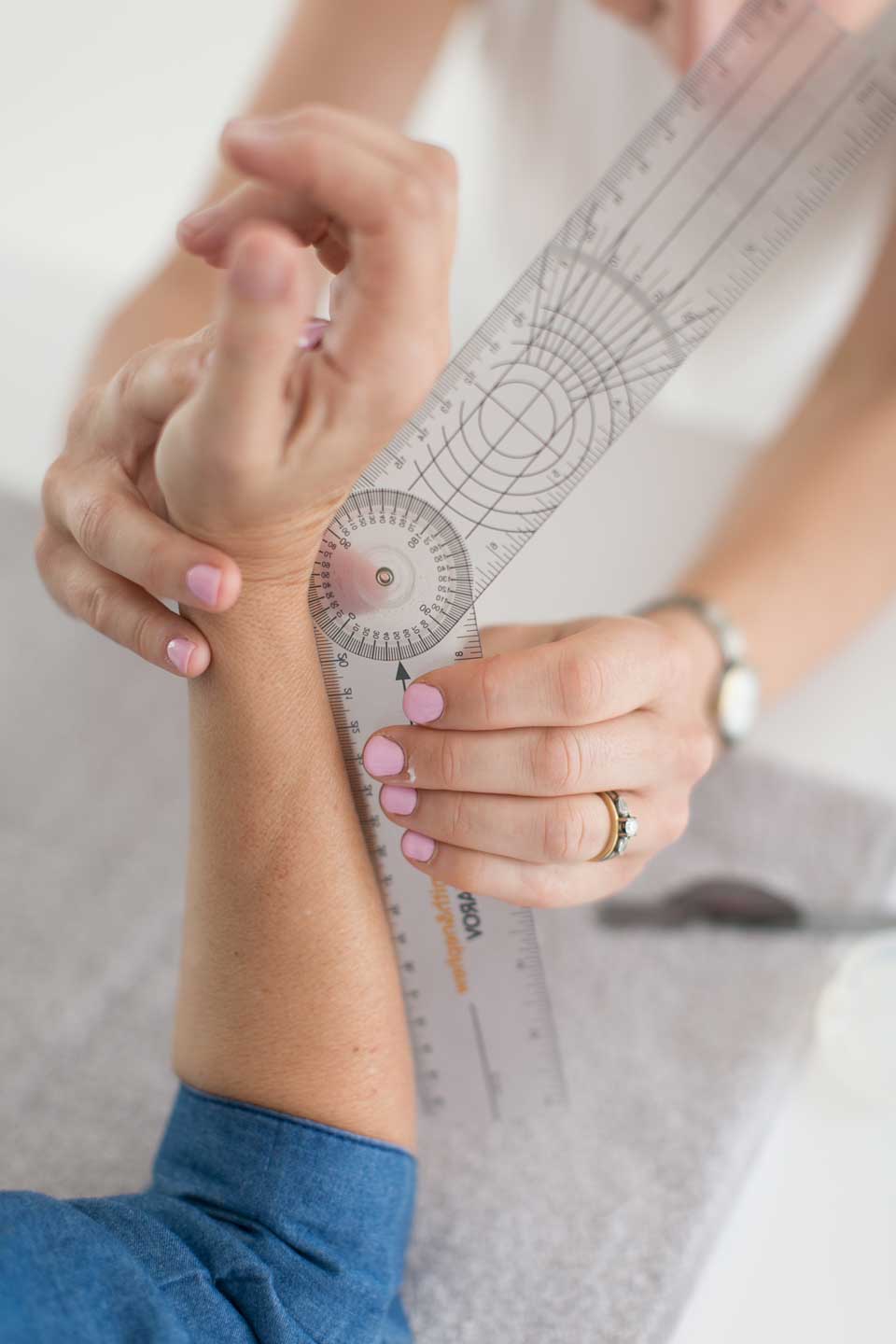
Aims of hand therapy
- Management of swelling and wound care.
- Wrist mobilisation exercises: To improve the range of movement of the wrist
- Scar management: To improve your scar from getting stuck down to the underlying soft tissue
- Wrist strengthening exercises: To improve the strength of the muscles around your wrist to reduce the mechanical tension on your wrist joint capsule and therefore reduce the risk of re-occurrence of the ganglion.
After surgery to remove a ganglion, patient may be followed up in hand therapy for four to six times. Follow up appointments may vary from person to person depending on tissue healing and progress made in therapy.
*The above text is for information purposes only and should not be seen as health advice. Please consult with your medical practitioner should you require health advice or medical treatment.